Blog Post By Arin Wallington
Rethinking Trauma Care: How Willamette Wellness Center Built a Clinician-First Mental Health Practice
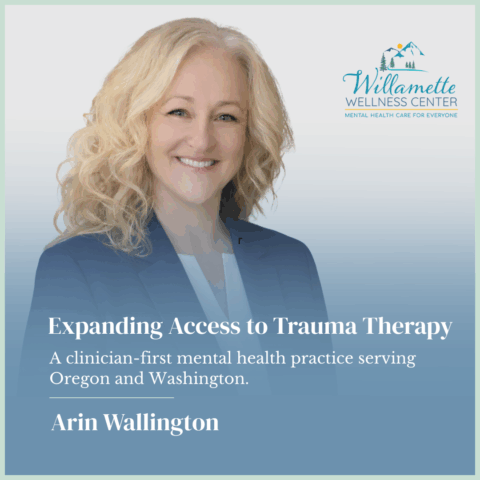
A trauma-focused practice in Milwaukie, OR, is addressing two of the mental health industry’s biggest challenges: limited access to mental health care and widespread clinician burnout.
Key Takeaways
- Mental health industry challenge: Rising demand for trauma-informed therapy is colliding with widespread clinician burnout.
- Clinic founder insight: After more than two decades in the field, trauma therapist Arin Wallington built Willamette Wellness Center to address both issues.
- A clinician-first model: WWC combines specialized trauma therapies with a clinician-first structure that prioritizes sustainable workloads and strong clinical support.
- Growing client impact: The mental health clinic has expanded to 52 therapists, serving clients across Oregon and Washington and delivering more than 45,000 hours of client care annually.
- Expanding infrastructure: Willamette Wellness Center’s new 2,500-square-foot office in Milwaukie, OR, supports continued growth in trauma-informed services.
In the past year alone, Willamette Wellness Center, a mental health clinic in Milwaukie, OR, delivered more than 45,000 hours of trauma-informed care.
Demand for mental health care in the United States has surged in recent years, particularly for trauma-focused treatment. Yet access remains limited. Many clients face long waitlists or struggle to find clinicians trained in specialized therapies such as EMDR, DBT, Internal Family Systems, or other advanced trauma-informed modalities.
At the same time, the industry faces another challenge: clinician burnout. High caseloads, administrative burden, and productivity pressures in “traditional” (predatory) mental health care systems have pushed many therapists to reduce their availability or leave the field altogether.
The result is a system where both patients and providers are under strain.
Willamette Wellness Center was built to address both sides of that equation.
Insight from WWC’s Founder, Arin Wallington
Trauma therapist Arin Wallington founded Willamette Wellness Center after more than two decades working in community mental health and private practice. Over the course of her career, she repeatedly saw the same patterns emerge: clients struggling to access high-quality trauma care, and talented clinicians burning out in systems that didn’t support them.
WWC was built around a simple idea: high-quality trauma care requires a sustainable environment for clinicians.
“Over time, I realized that the same structural problems were affecting both clients and clinicians,” said Wallington. “People who needed trauma-informed care couldn’t access it, and clinicians were burning out trying to provide it. WWC was designed from the ground-up to address both issues.”
A Model That Attracts Top Clinicians
The practice brings together highly trained clinicians specializing in evidence-based trauma therapies, including EMDR, Internal Family Systems (IFS), and Dialectical Behavior Therapy (DBT). These approaches are widely recognized for their effectiveness in treating complex trauma, anxiety, and related conditions.
Equally important, WWC has built a practice structure that prioritizes clinician sustainability. In an Oregonian article, Wallington shares that the therapists work manageable caseloads, receive strong clinical support, and operate on a four-day workweek.
This model helps address one of the mental health industry’s biggest bottlenecks: attracting and retaining experienced clinicians.
Growth Driven by Outcomes
Across the behavioral health sector, clinician shortages remain a major constraint on growth. Many practices struggle to recruit experienced trauma therapists, particularly those trained in specialized modalities.
Willamette Wellness Center’s clinician-first model has proven to be a strong differentiator.
By prioritizing sustainable workloads, higher-than-industry-standard salaries, and professional support, the practice has attracted highly skilled clinicians who want to do deep clinical work without sacrificing their well-being. This structure also supports collaboration and continued training in trauma-focused modalities, helping maintain a high standard of care.
For clients, that translates into access to experienced providers and consistent treatment quality.
Scaling Trauma-Informed Care
The model has allowed Willamette Wellness Center to grow steadily into a multi-clinician platform serving clients throughout Oregon and Washington. Many clients seek out the practice specifically for trauma-focused treatment, often after struggling to find providers trained in these approaches elsewhere.
The combination of specialized expertise, strong patient outcomes, and a supportive work environment positions WWC to expand access to trauma-informed care while maintaining the clinical quality the industry urgently needs.
