Blog Post By Arin Wallington
EMDR Therapy: Your Portland-Area Guide to How it Works, How it Helps, and How to Start
EMDR Therapy at a Glance
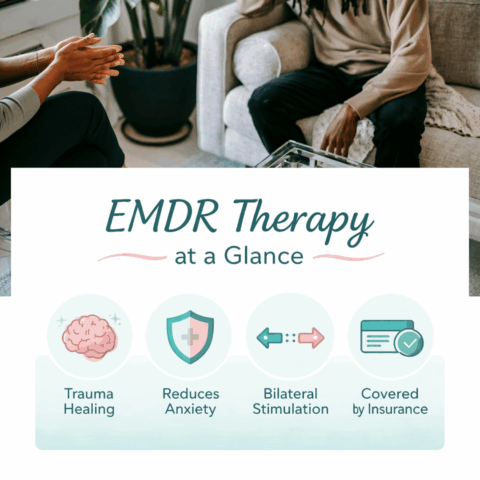
- What it is: A structured, evidence-based therapy that helps the brain reprocess traumatic memories
- What it helps: PTSD, anxiety, panic, phobias, childhood trauma, medical trauma, and more
- How it works: Uses bilateral stimulation (eye movements or tapping) to reduce emotional intensity.
- What it feels like: You stay present, grounded, and in control
- Covered by insurance: Yes — in Oregon and Washington
- Specialized WWC therapists with advanced training in EMDR: Yes
Does your body react like it’s reliving an earlier trauma?
Maybe you start crying when you move your head a certain way, as an old car crash floods your memories. Or, your body goes into hypervigilant mode every time you hear a firework explode, and you can’t make the anxiety turn off.
You may know where your reaction comes from, and even intellectually understand what’s going on. But your body refuses to let go.
EMDR helps your brain and nervous system fully process experiences that never fully resolved. Over time, the emotional charge goes away, your body relaxes, and the past stays in the past.
Wondering if EMDR can help you?
Fill out our new client form to learn whether EMDR is a good fit for you.
EMDR Therapy FAQs
What is EMDR therapy?
When we experience trauma, our brain doesn’t always fully process it, and memories can feel “stuck,” resurfacing as flashbacks, anxiety, or even physical symptoms. That’s why you may cry unexpectedly, feel nauseous, or feel like you can’t “get past it.”
You can.
EMDR helps you reprogram your thoughts, behaviors, and emotions caused by past trauma. It uses bilateral stimulation (for instance, eye movements or tapping) to help your brain reprocess your memories. Over time, the emotional charge attached to specific memories softens and slows down.
You can remember the event without reliving it.
You stay present and in control throughout the process, and nothing is forced or rushed.
Is EMDR therapy right for me?
EMDR may be a good fit if:
- You feel stuck in patterns you understand intellectually, but can’t shift
- Your body strongly reacts to reminders of past experiences
- You’ve tried talk therapy, but you’re ready to try something different.
- You want trauma work that doesn’t require retelling every detail.
It may not be the first step if:
Fill out our new client form to learn whether EMDR is a good fit for you.
Is EMDR therapy evidence-based for PTSD?
Yes. EMDR is a widely researched and evidence-based therapy recognized as an effective treatment for trauma and related concerns. Controlled studies on EMDR and PTSD were published in 1989, and the World Health Organization recognized the worldwide impact of EMDR in 2013, saying it should be considered for individuals with PTSD.
Our clinicians regularly use EMDR with clients who have lived through accidents, medical trauma, childhood abuse, and high-stress professions — including first responders.
Can EMDR help with anxiety?
Yes, if you’re feeling anxious, EMDR may be a therapeutic option for you. EMDR is shown to help people with generalized anxiety, phobias, panic disorders, and social anxiety.
What other conditions can EMDR treat?
Outside of PTSD, people seek EMDR therapy for long-standing hypervigilance, childhood or relational trauma, medical or caregiving trauma, eating disorders, depression, dissociative disorders, obsessive-compulsive disorder (OCD), and emotional responses that don’t seem to match their current life. You don’t need a single dramatic event to benefit.
Who has benefited from EMDR therapy?
People from all walks of life have used EMDR. Some public figures, including Prince Harry, Sandra Bullock, Evan Rachel Wood, and others, have openly discussed its role in their trauma recovery.
Does insurance cover EMDR?
Good news – EMDR is covered by insurance in Oregon and Washington. Because EMDR is billed as standard psychotherapy, most insurance plans that cover mental health care also cover EMDR sessions.
Here’s what Portland metro clients need to know about EMDR and insurance.
I live in Portland. Can I find an EMDR therapist near me?
Yes, we offer in-person appointments (by appointment only) in our new Milwaukie, OR clinic. Clients have dedicated parking, an elevator for easy access, and can relax in our beautiful waiting room.
What about virtual EMDR therapy? Is EMDR effective when done online?
It is – EMDR is just as effective when done virtually. Plus, many insurance plans in Oregon and Washington cover virtual EMDR therapy as well as in-person. So, if you live in Lake Oswego, Vancouver, or Tualatin – or as far away as Eugene or Grants Pass – you can still enjoy EMDR therapy from the comforts of your own computer chair.
What qualifications do your clinicians have around EMDR therapy?
Our clinicians are Master’s-level therapists who also receive advanced training in the latest EMDR therapy techniques. Our most recent therapeutic intensive training by Coast to Coast EMDR was in late 2025.
Working together starts slowly and intentionally. We begin by getting to know you — your history, your goals, and your pace. Before any reprocessing starts, we focus on helping you feel grounded, supported, and resourced.
Some people move into EMDR work fairly quickly, while others take more time. Both are normal and respected. This is collaborative work, guided by readiness — not pressure, timelines, or checklists.
How long does EMDR therapy take to work? How many sessions should I expect?
Everyone’s healing timeline is different and depends on many personal factors. Some people feel relief in fewer than six sessions, while others benefit from a few months of help. It depends on what your body and mind need to heal.
Wondering if EMDR might help?
If you’re feeling a quiet “this might be what I need,” the next step is simple.
Fill out our new client form to learn whether EMDR is a good fit for you.
