Blog Post By Arin Wallington
Meet Kadyn Mauldin: Online & In-Person Art Therapy in Milwaukie, OR
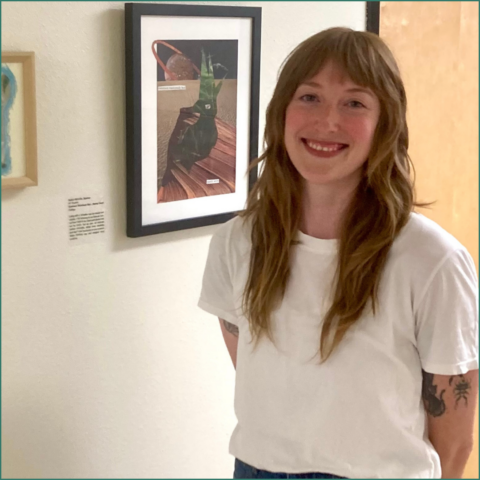
Meet Kadyn Mauldin, an art therapist at Willamette Wellness Center in Milwaukie, Oregon. Kadyn helps adults and teens 14 and over explore emotions, reconnect with their bodies, and rediscover their confidence.
What would your anxiety look like if you could draw it?
Maybe it would be a tangle of lines, a dark cloud, or something you can’t quite explain.
Putting that feeling on paper can make it seem a little less overwhelming. Instead of carrying it around inside, you have something you can look at, talk about, and begin to understand. The anxiety may not disappear, but expressing it creatively can help make it feel more manageable.
That’s part of what Kadyn loves about art therapy. She uses creative expression, conversation, and body awareness to help people better understand their emotions and rebuild trust in themselves.
And sometimes, the simple act of creating something can open the door to conversations that might otherwise be difficult to have.
An Unexpected Path to Becoming an Art Therapist
Before becoming a therapist, Kadyn had a career history that was anything but conventional.
She worked as a bartender and server, made elaborate performance hula hoops in Bend, OR (including ones that lit up or could be set on fire), helped with holiday events alongside her event-planner mother, and even spent a summer pouring concrete.
When she applied to graduate school, she worried that her seemingly unrelated jobs might make her seem less qualified than other applicants.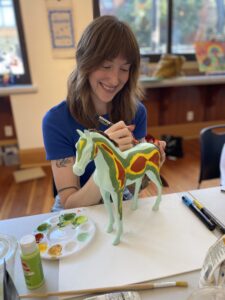
Today, she sees those experiences differently. Working in so many environments taught her how to connect with people from all walks of life, adapt to unexpected situations, and appreciate different perspectives.
She was introduced to art therapy during the pandemic, while recovering from a difficult injury and trying to figure out what she wanted to do next.
A friend came across an art therapy graduate program and immediately thought of her. Kadyn had always loved visual art, music, and working with people, but she never imagined a profession that combined those interests.
“I didn’t know that it existed, that I would find a career that I was actually really passionate about,” she recalls.
After completing the prerequisites, she enrolled in the art therapy graduate program at Lewis & Clark College in Portland.
What initially seemed like a collection of unrelated jobs had helped prepare her for a career that brought her interests together.
Art Therapy Isn’t About Being a Good Artist
When people hear art therapy, many picture children drawing or assume they need artistic talent to participate.
Kadyn quickly dispels both ideas.
Art therapy can benefit children and adults of all skill levels, from complete beginners to professional artists. In fact, the finished artwork is often far less important than what happens during the creative process.
For people processing trauma or other difficult experiences, finding the right words can be challenging. Working with art materials offers another way to explore feelings, memories, and patterns that may be hard to describe.
Kadyn has seen older adults rediscover their creativity after decades away from art, including people who begin experimenting with watercolor and find new ways to reflect on their experiences.
But don’t expect Kadyn to examine the finished painting and announce what it reveals about your subconscious. She might ask what stood out during the creative process or how someone felt working with a particular material.
“People’s artwork means what it means to them,” she explains.
Learning to Trust Your Own Voice Again
Kadyn is particularly interested in the stories people carry about themselves, especially those they’ve absorbed from other people.
 Some of those stories can become so familiar that people stop questioning whether they’re true.
Through narrative approaches, conversation, and creative expression, she helps clients examine beliefs and stories that may no longer serve them.
A painting or comic can challenge an old assumption or help someone imagine a different future.
“A person feeling confident in their own power is the ultimate healing from trauma,” Kadyn says.
For someone rebuilding that confidence, even small choices can matter.
When someone visits her office for the first time, Kadyn makes sure they know where the exits are and what to expect. Throughout the therapeutic process, clients can choose how they participate, including which materials they use and whether a particular activity feels comfortable.
These decisions give clients opportunities to practice expressing preferences, setting boundaries, and changing their minds. For someone whose sense of safety or control has been affected by trauma, that freedom can be especially meaningful.
One of the most rewarding parts of her work is hearing clients describe changes they once struggled to imagine.
“I did not know I could feel this good,” some have told her.
Those words remind her why she loves her work.
Understanding the Connection Between Your Body and Emotions
Emotions don’t exist only in our thoughts. Anxiety and stress can affect how we feel physically, sometimes before we’ve consciously recognized what we’re experiencing.
Kadyn incorporates somatic approaches into her work to help clients become more aware of those connections and gradually develop trust in what their bodies are communicating. 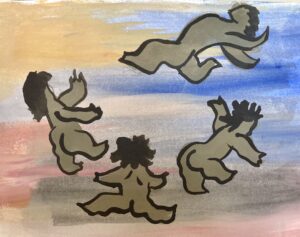
This aspect of therapy is particularly personal for Kadyn.
Because Kadyn lives with chronic pain and chronic illness herself, she knows how difficult it can be when symptoms aren’t visible or easily explained. She sometimes shares aspects of her experience when she believes doing so will help a client feel understood.
“People feel like I get it,” she says.
For someone who has struggled to have their experiences taken seriously, being believed can be an important part of feeling safe enough to explore what’s happening.
Kadyn also knows that paying attention to physical sensations isn’t always comfortable, particularly for people living with trauma or chronic pain. She respects those limits rather than pushing clients to reconnect with their bodies before they’re ready.
Art can offer a gentler starting point. Working with clay, moving a pencil across paper, or watching paint spread can engage the senses and encourage people to notice what they’re experiencing.
Kadyn considers these physical and sensory qualities when selecting activities, always keeping the client’s needs and preferences in mind.
What Does an Art Therapy Session With Kadyn Look Like?
If you’re imagining an art class with a therapist standing over your shoulder, that’s not how Kadyn works.
Her sessions, online or in person, are collaborative and tailored to each client. Some focus more on conversation, while others include creative activities, body awareness, or a mix of approaches.
Once she’s established a relationship with someone, she might suggest spending some time making art without talking. Kadyn sometimes works on her own art alongside the client, creating a quiet, nonjudgmental environment where neither person needs to produce anything impressive.
That quiet time is important. Conversation can sometimes keep people in familiar ways of thinking. Making art without talking creates room for something different to emerge.
A client might become absorbed in the materials, feel frustrated when something doesn’t turn out as expected, or simply enjoy making something with no particular goal. Those reactions can become part of the conversation afterward.
While therapy can involve difficult emotions, Kadyn also welcomes playfulness and humor. Making art can be fun, even when the work behind it is serious.
How the Therapeutic Relationship Creates Change
One of Kadyn’s favorite writers, Octavia E. Butler, wrote something that has stayed with her: “All that you touch, you change. All that you change changes you.”
For Kadyn, those words capture something essential about therapy: the relationship changes both people. While she brings professional knowledge and experience to therapy, she also learns from clients, whose perspectives can challenge her thinking and deepen her understanding of the world.
She recognizes that circumstances beyond their control, including larger social and systemic forces, often shape people’s challenges. Although therapy can’t erase those realities, Kadyn finds hope in the ways human connection can create positive change.
That commitment to growth extends beyond her work with clients. Kadyn also practices the creative and body-awareness techniques she shares, making time for her own reflection and self-care.
Crows, Creativity, and Portland Adventures
Outside the therapy room, Kadyn enjoys exploring Portland’s creative community and spending time in nature.
She lives near Mount Tabor Park, where she loves walking, listening to birds, and appreciating the trees. Camping along the Oregon Coast is another favorite activity, along with music and visiting art exhibits.
And then there are the crows.
 Kadyn has a particular affection for them and spent quite a while trying to take a selfie with one. After numerous unsuccessful attempts, she was ready to give up. Her boyfriend encouraged her to keep trying, and eventually a crow perched on a nearby wire long enough for her to capture the photo she’d been hoping for.
Her love of art also means she has a weakness for art-supply stores.
She enjoys visiting Columbia Art and Drafting on East Burnside Street, though she admits it’s sometimes better for her wallet to stay away.
Her absolute favorite is SCRAP Creative Reuse, a Portland nonprofit where donated art materials and unexpected treasures can inspire new projects.
She also recommends SCRAP to clients. It’s an affordable way to experiment with different materials, and you never know what you’ll find.
Try Kadyn’s Five-Minute Creative Check-In
You don’t need an art studio or expensive materials to experiment with creative expression. Kadyn recommends an approachable activity you can do with whatever you have at home.
Choose a pen, pencil, marker, or highlighter that matches your mood, then draw a circle on paper.
Spend up to five minutes filling the circle with whatever comes to mind. You might write words, sketch shapes, scribble, or combine several approaches.
Once you’ve finished, take a moment to look at what you’ve made. Notice how you feel and whether anything about the experience surprised you.
There’s no correct result, and you don’t have to like what you’ve created. Even if you find yourself judging your work, you can notice the feeling without needing to change it.
As she puts it, “Whatever feels right is right.”
Explore Art Therapy With Kadyn at Willamette Wellness Center
Kadyn offers art therapy and counseling at Willamette Wellness Center, with in-person appointments in Milwaukie, Oregon, and telehealth options.
If you’ve spent a long time questioning your feelings, second-guessing your choices, or struggling to put your experiences into words, Kadyn offers a supportive space to explore what you’re experiencing at your own pace.
You don’t need artistic talent, the right words, or a clear idea of where to begin. You can start exactly where you are.
Interested in working with Kadyn? Fill out our new client form to get started.
All images by Kadyn Mauldin
